


High quality
Export-quality product offering

National sales
Product distribution across Iran and the world

Full-time support
Connect with our top experts.

Immediate transmission
Tracking orders domestically and internationally

Export-quality product offering
Product distribution across Iran and the world
Connect with our top experts.
Tracking orders domestically and internationally
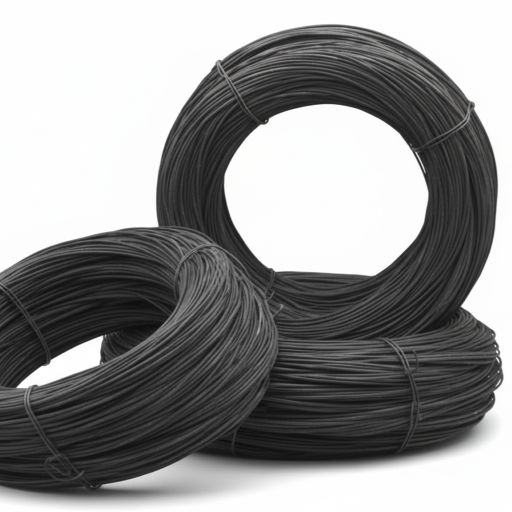
this Product is a woven industrial product made from low-carbon steel that is formed through rolling and drawing processes, and due to its dark, oxidized surface and lack of galvanization, it is known as “black.” Its export quality indicates the adherence to strict international standards in production, robust and uniform packaging for global market competition.
By Material and Standard:
Low-Carbon Steel (Soft): Flexible, suitable for twisting and weaving (like mesh).
Medium/High-Carbon Steel (Hard): High tensile strength, suitable for structural and holding applications.
According to Standard: ASTM (USA), DIN (Germany), BS (UK), ISO (International).
Thin: 0.5 to 1.5 mm (e.g., for handicrafts, fine weaving).
Medium: 1.5 to 4 mm (most commonly used size for mesh, packaging, nails).
Thick: 4 to 8 mm and above (for heavy industrial and structural uses).
By Production Process and Surface Finish:
Annealed (Heat-Treated): Soft and flexible.
Hard (Unannealed): Strong and resistant.
Oiled: Surface coated with oil to prevent corrosion during storage and transportation.
By Export Packaging:
Coil: Typically 50 to 500 kg, with strapping and plastic.
Spool/Reel: For thinner wires, arranged and ready for machine use.
Rod: Cut to standard lengths.
Main Applications:
Mesh Production: Chicken wire, fence, gabion, and mesh.
Packaging Industry: Bundling rebar, industrial products, etc.
Nail and Bolt Manufacturing.
Metal Industries: Welding, cage construction, fittings.
Building Industries: Light reinforcement, concrete pouring.
Advantages of Export Quality:
Uniformity in diameter and strength throughout the coil.
Low impurities (low sulfur and phosphorus).
Moisture-resistant and impact-resistant packaging for marine and long-term transportation.
Quality certificates (Certificate of Analysis) and chemical analysis sheets.


